Avinode Charter Trends: Key Routes and Aircraft Preferences in Asia-Pacific


As the world’s leading air charter sales and sourcing platform, Avinode provides online search and transaction services that connect charter brokers and aircraft operators worldwide, and processes around 8 million trip searches and 13 million trip requests annually. Operators list their fleet information on Avinode, including aircraft size categories, availability, location, and reference charter prices. Brokers, representing clients such as high-net-worth individuals, government agencies, and corporations, use the platform to find suitable charter options. The Avinode system matches these requests with available aircraft and facilitates information exchange and confirmations between brokers and operators, while final charter contracts are completed outside the platform.
This report examines charter search activity on Avinode across three key regions — Europe, North America, and Asia. By exploring the most sought-after routes, departure points, preferred aircraft types, and lead time trends, we tried to provide valuable insight into what charter clients across different regions are looking for.
Note:
1. Date range is 1st July 2024 to 30th June 2025.
2. APAC is defined as East Asia, Southeast Asia and Oceania.
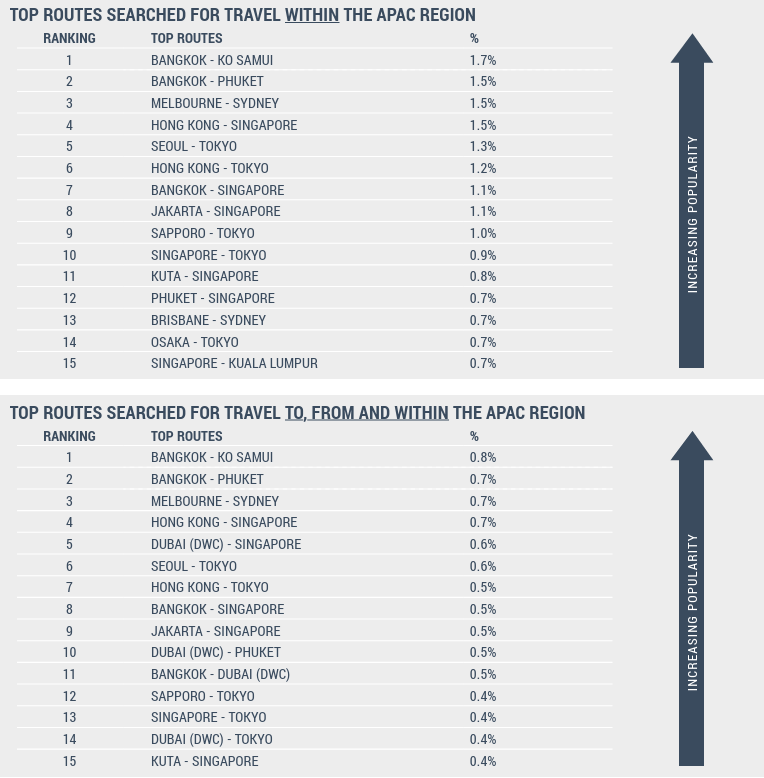
The top three routes of the most searched charter routes within the Asia-Pacific region were all domestic: Bangkok–Ko Samui (1.7%) and Bangkok–Phuket (1.5%) in Thailand, reflecting Thailand’s strong appeal as a leisure destination, while Melbourne–Sydney (1.5%) ranked third.
Singapore appeared as a pivotal aviation hub, serving as the departure or arrival point for six of the top 15 routes across East Asia and Southeast Asia. Tokyo was another key hub, appearing in five of the top routes, including two domestic and three international links.
In searches to, from and within the Asia-Pacific region, Bangkok–Ko Samui (0.8%) also led the list. Notably, long-haul connections from the Middle East featured prominently, with Dubai appearing in four of the top 15 routes: Dubai–Singapore (0.6%) ranked fifth, followed by Dubai–Phuket (0.5%), Bangkok–Dubai (0.5%), and Dubai–Tokyo (0.4%) – these figures highlight Dubai’s increasing importance as a bridge between Asia-Pacific and the rest of the world.
EUROPEAN BROKERS

European broker search activity in APAC was centered around major regional hubs such as Singapore, Bangkok, Tokyo and Hong Kong. This reflects both business travel and leisure charter patterns. These hubs serve as gateways for European high-networth individuals seeking luxury travel to Southeast Asia’s top destinations. Additionally, routes such as Dubai–Singapore reinforce the role of the Middle East as a strategic link in European APAC travel itineraries.
US & CANADIAN BROKERS

North American brokers showed strong preference for charter flights connecting to Tokyo, Singapore, Hong Kong and Bangkok. These destinations reflect a mix of business and leisure activity. Of particular note is the inclusion of Tahiti as a top destination — indicating a strong appetite for high-end remote leisure travel among U.S. and Canadian clients.
ASIAN BROKERS

Searches from Asian brokers exhibited a slightly different trend. Demand clustered around major regional key metropolitan hubs, with Singapore, Hong Kong, and Tokyo accounting for 32% of all departures. These locations are not only top charter markets but also home to the largest APAC-based fleets – Greater China, Japan, and Singapore together contribute 29.1% of the region’s aircraft.

The charts show the Top 5 aircraft categories searched for travel from Asia-Pacific departure points, as well as a breakdown of preferences from European, US & Canadian, and Asian brokers.
Ultra long range (23%, e.g., G650, Global 7500) and heavy jets (19%, e.g., Challenger, Legacy 600) dominated the Asia-Pacific charter market. The ultra long range aircraft supported intercontinental missions to the Middle East, Europe and North America, while heavy jets were preferred for longer regional flights to provide space and comfort.
Asian clients often prefer larger aircraft even for intra-Asia travel, valuing the comfort and prestige they offer. At the same time, turboprops and light jets remained significant, reflecting demand from European and North American brokers who replicate their home-market travel patterns in Asia-Pacific. As Avinode notes, “Asian clients often want heavier aircraft for travel within Asia, but lighter aircraft are desired too – driven by clients familiar with smaller cabin sizes in their home markets.”

The table above shows the days in advance between search and flight departure. Analyzing this data provides insight into the booking behavior and decision-making patterns of business jet charter customers in the Asia-Pacific region.
Avinode data showed that 36% of charter searches in the AsiaPacific region are made more than 31 days before departure — higher than in the U.S. or Europe — reflecting strong planning behavior linked to major events, conferences, and holiday travel. In these cases, operators/brokers are often expected to act as consultants, offering aircraft comparisons, route advice, and tailored service packages. In contrast, 35% of searches occur within seven days of departure, indicating high levels of urgent, last-minute demand driven by sudden business needs or spontaneous premium travel.
This dual behavior suggested two distinct customer profiles: the planners and the impulse travelers. As Avinode notes, “For the operator that can navigate short-notice arrangements, there is lots of demand to win.”
To effectively serve both leisure-driven and urgent business travel in the Asia-Pacific region, charter operators and brokers should offer flexible solutions that match each unique request. Given the fact that many of the top routes are short hops, positioning lighter aircraft in key hubs like Singapore and Bangkok enables operators to cater to regional demand while aligning with client preferences from different markets. At the same time, ultra-long-range jets are essential for meeting the increasing intercontinental charter activity that connects Asia with the rest of the world. Additionally, Given the strong search activity from European and North American brokers, maintaining a robust digital presence is increasingly important for operators looking to capture and convert this interest.
INDUSTRY REPORTS



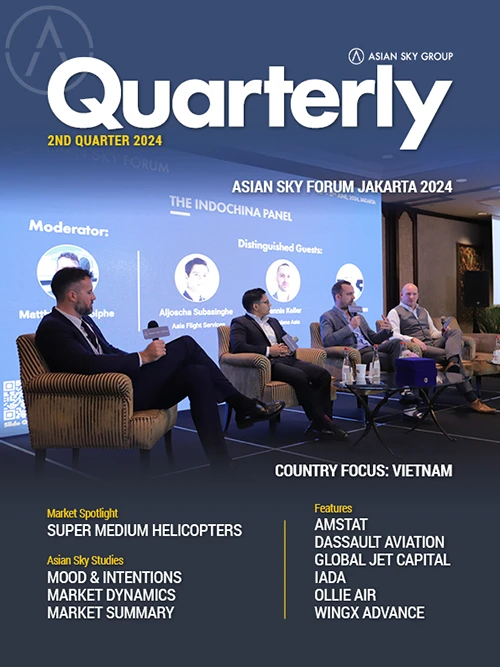
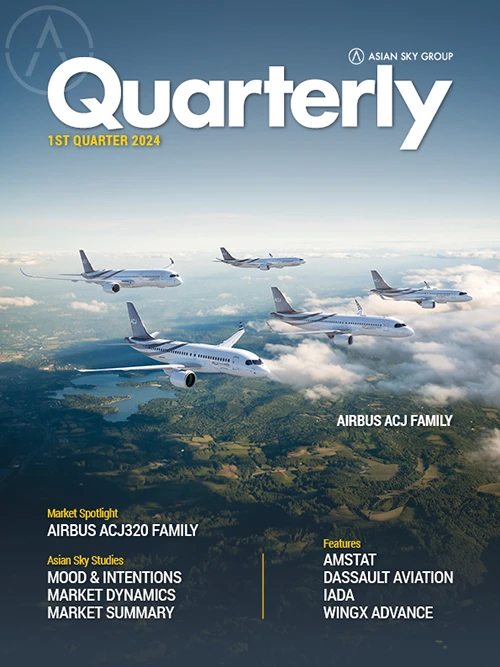
Asian Sky Quarterly
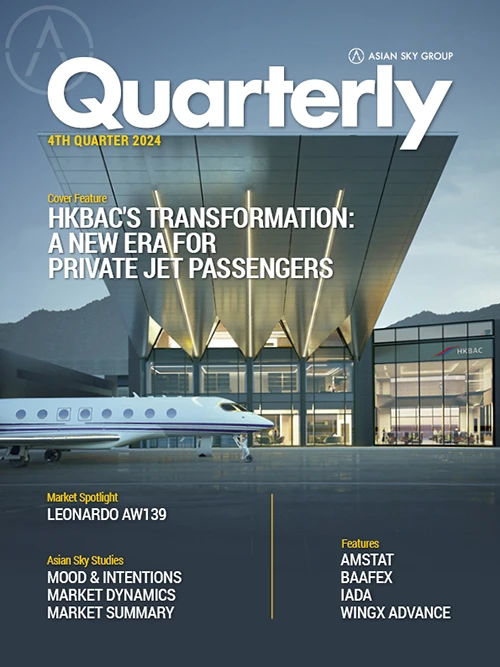
2025 Q1
Business Aviation Business Aviation News – Q1 2025 Business Aviation BAAFEx Brings Shows Back To Asia See all articles


Civil Helicopter Fleet Report
YE 2024
Business Aviation Executive Summary – Civil Helicopter Fleet Report YE 2024 Business Aviation The Asia-Pacific Offshore Helicopter Fleet See all articles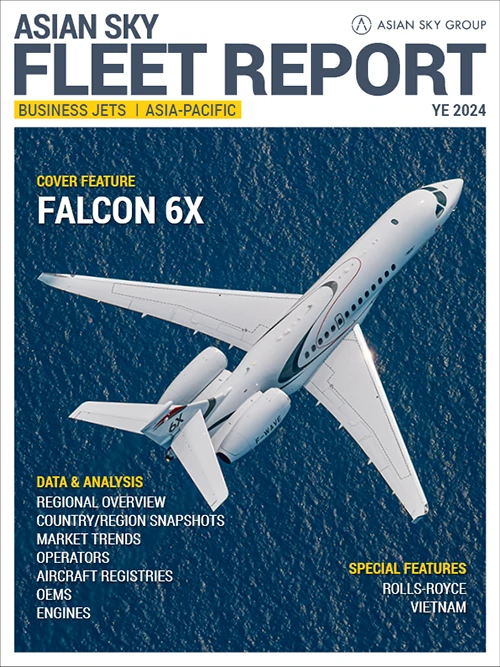


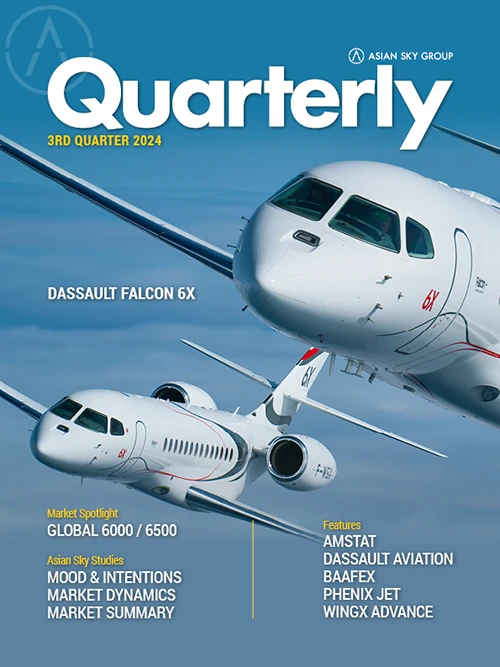





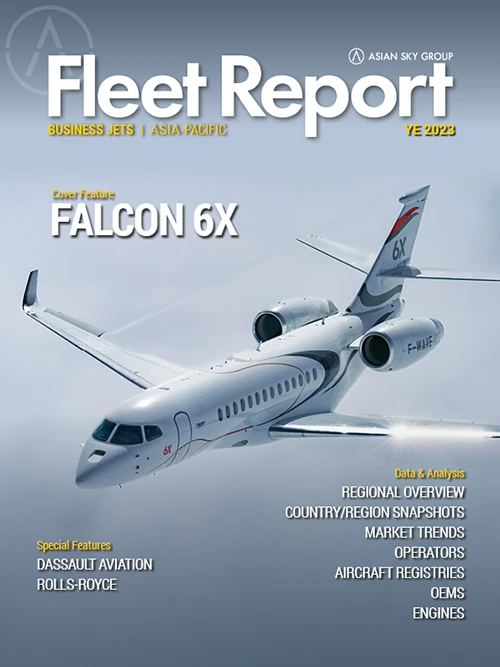

Business Jet Fleet Report
YE 2023
Business Aviation First To Fly: Dassault Falcon 6X Business Aviation CorporateCare Enhanced: Keeping Business Jets Flying See all articles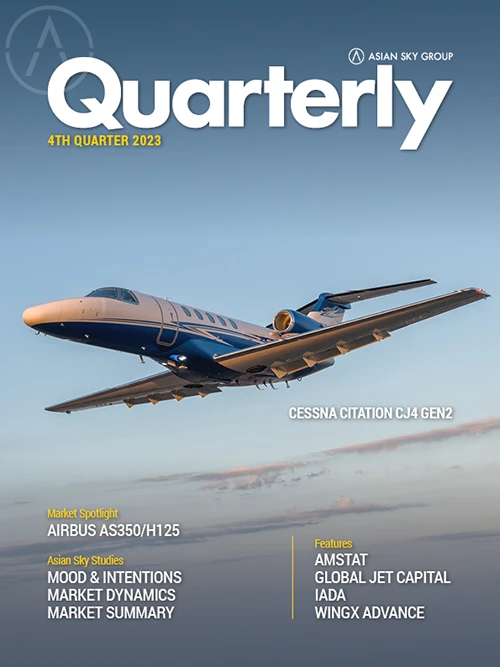

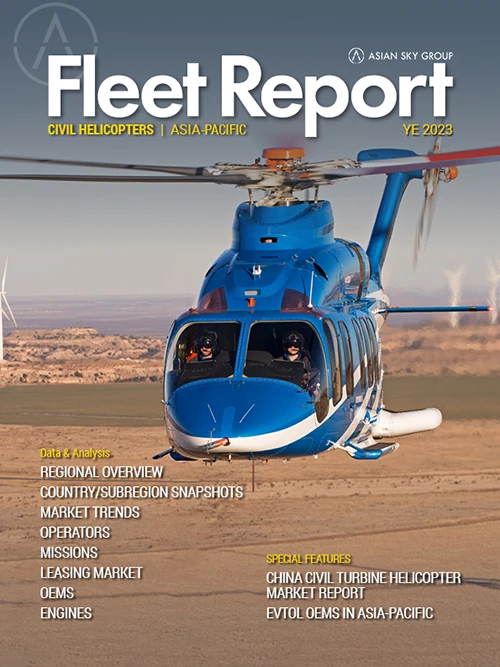

Civil Helicopter Fleet Report
YE 2023
Civil Helicopters Other Civil Helicopter Fleet Report YE 2023 – Executive Summary Civil Helicopters eVTOL OEMS in Asia-Pacific See all articles



Asian Sky Quarterly
2023 Q2
Business Aviation Signature Revamps Anchorage FBO Business Aviation Dassault’s Asia Pacific Strategy See all articles


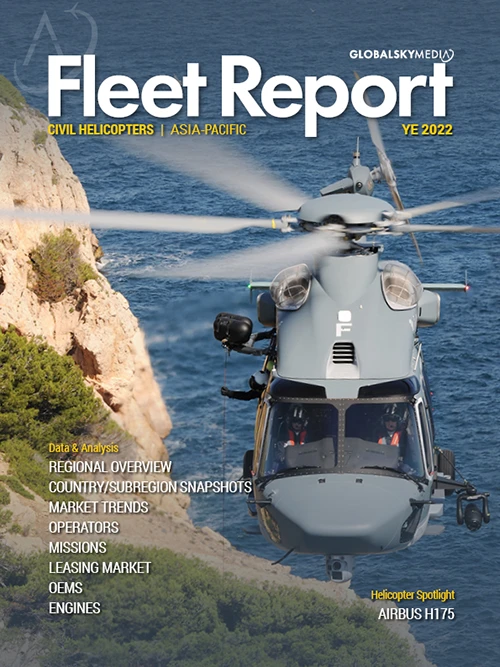

Civil Helicopter Fleet Report
YE 2022
Civil Helicopters Helicopter Spotlight: Airbus H175 See all articles

Asian Sky Quarterly
2022 Q4
Business Aviation New, Big Falcons Suit Asia-Pacific Business Aviation Supporting Modern Time Machines See all articles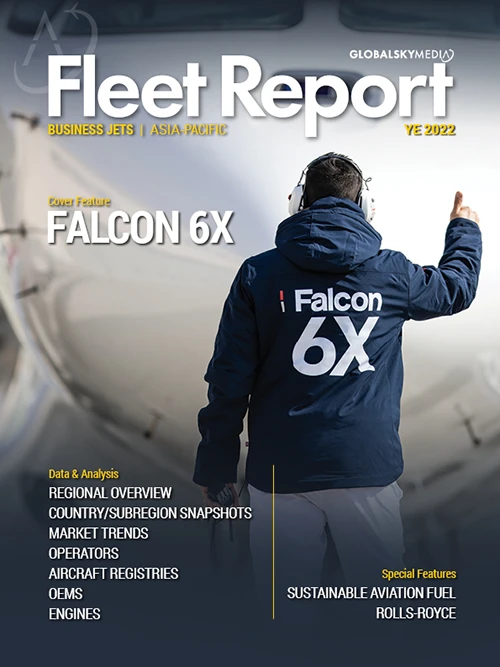



Business Jet Fleet Report
YE 2022 - Europe
Business Aviation Luxaviation CEO Sees Deficiencies in Seemingly Buoyant Market Business Aviation Supporting Modern Time Machines See all articles

Business Jet Fleet Report
YE 2022 - MENA
Business Aviation DC Aviation Al-Futtaim Celebrates Ten Years in the Middle East See all articles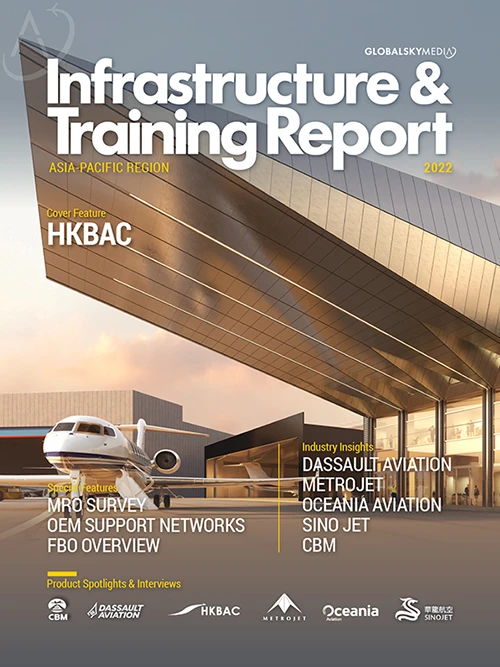











Business Jet Fleet Report
YE 2021
Business Aviation Market Trends – Business Jet Fleet Report YE 2021 Business Aviation 10 Year Forecast See all articles

Civil Helicopter Fleet Report
YE 2021
Civil Helicopters Leasing Market – Civil Helicopter Fleet Report YE 2021 Civil Helicopters EMS Market – Civil Helicopter Fleet Report YE 2021 See all articles






Asian Sky Quarterly
2021 Q3
Other Pre-owned Market Spotlight: Citation Sovereign/Sovereign+ – Asian Sky Quarterly 2021 Q3 See all articles
















Civil Helicopter Fleet Report
YE 2019
Civil Helicopters EVTOL News in Asia – Civil Helicopters YE 2019 Civil Helicopters Engine OEM Overview – Civil Helicopters YE 2019 See all articles










ASG’s latest market news & aircraft sales updates:
Thanks for your subscription
© Copyright Asian Sky Group -2025 | All Rights Reserved
